
Brazil Garment Industry and Sewing Automation Development
How Brazil’s Garment Industry Is Moving Toward Sewing Automation
Brazil has one of the most developed apparel manufacturing industries in Latin America. With a large domestic market, diverse garment production base and growing demand for higher production efficiency, Brazilian garment factories are increasingly exploring automation technologies to improve competitiveness.
From basic apparel and knitwear to sportswear, underwear and fashion garments, Brazilian manufacturers are facing new challenges: rising production costs, increasing quality requirements, shorter delivery times and the need for more flexible production.
As a result, sewing automation is becoming an important direction for the future development of Brazil’s garment industry.
1. Overview of Brazil’s Garment Industry
Brazil’s textile and apparel industry covers a wide range of manufacturing activities, including fabric production, garment manufacturing, fashion production and textile-related businesses.
The Brazilian apparel sector includes many important categories:
- T-shirts and knitwear
- Sportswear
- Underwear
- Casualwear
- Jeans and denim products
- Uniforms and workwear
- Fashion garments
Unlike some markets focused only on large-volume basic production, Brazil has a diversified apparel industry that combines mass production with fashion-oriented manufacturing.
This creates demand for different types of industrial sewing equipment, from standard sewing machines to specialized automatic sewing solutions.
2. Main Challenges Facing Brazilian Garment Factories
Although Brazil has a strong garment manufacturing foundation, factories are facing several production challenges.
Rising Production Costs
Labor, materials and operational costs continue to influence garment production profitability.
Factories need to increase productivity while maintaining competitive pricing.
Skilled Worker Dependence
Many sewing operations still rely on experienced operators, especially for:
- Collar attaching
- Sleeve setting
- Waistband sewing
- Pocket attaching
- Decorative stitching
Automation helps reduce dependence on individual operator skills by creating more standardized production processes.
Quality Consistency
International and domestic brands require stable garment quality.
Common production problems include:
- Uneven seam quality
- Incorrect positioning
- Different results between operators
- Fabric feeding instability
Automatic sewing machines help improve consistency through precise control systems and automated processes.
Faster Delivery Requirements
Modern apparel buyers expect shorter production cycles and more flexible order management.
Factories need equipment that can improve efficiency without sacrificing quality.
3. Why Sewing Automation Is Growing in Brazil
The adoption of automatic sewing machines is closely connected with the development of smart manufacturing.
Industry 4.0 technologies, including IoT, automation systems, digital monitoring and intelligent equipment management, are becoming important directions in textile and apparel manufacturing. Research on Brazil’s textile sector has highlighted the application potential of technologies such as IoT, cloud computing, automation and digital production systems.
4. VMA Automatic Sewing Applications in Brazil’s Garment Industry
V-997TD-RCA Automatic Round Collar Setting Machine

//www.vmasewing.com/v-997td-rca--automatic-round-collar-attach-machine.html?is_preview=008dd5f32d1fa7ad5d33818a30983de0
Used for:
- T-shirt collar attaching
- Knitwear neckline processing
- Stable collar positioning
Automatic collar setting helps factories achieve consistent collar appearance and reduce dependence on skilled operators.
V-W500APW-BHR Automatic T-Shirt Bottom Hemming Machine
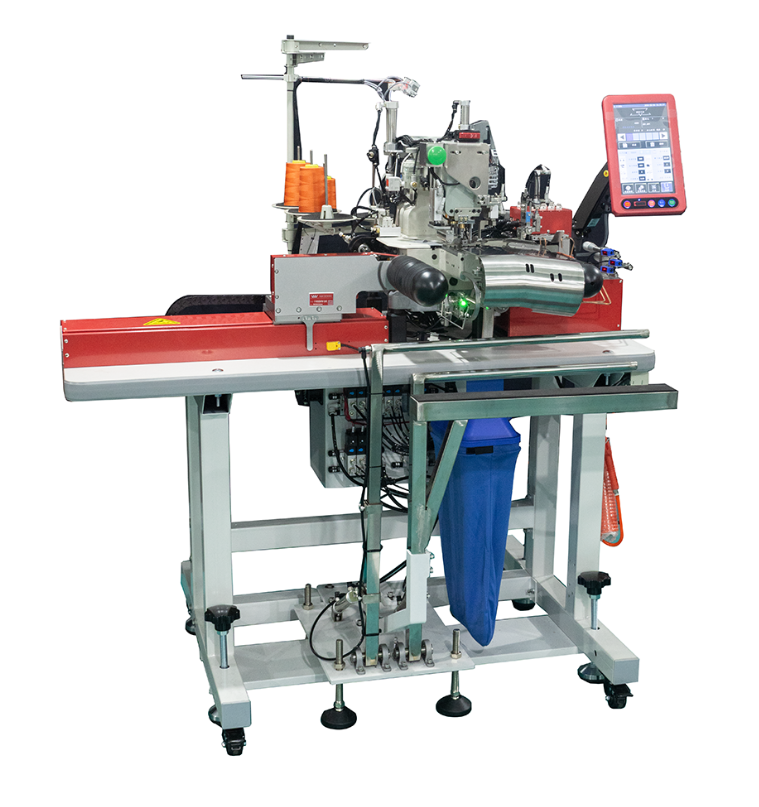
Used for:
- T-shirt bottom hemming
- Knitwear finishing
- Sportswear production
Automatic hemming improves production efficiency and ensures consistent bottom hem quality.
5. Automation Beyond T-Shirts
Brazil’s garment industry includes many different product categories, creating demand for specialized sewing solutions.
Sportswear Production
Sportswear requires:
- Elastic materials
- Stretch fabrics
- High durability seams
Automation solutions include:
- Automatic waistband sewing machines
- Elastic attaching machines
- Coverstitch solutions
Jeans and Denim Manufacturing
Denim production requires stronger sewing capabilities.
Solutions include:
- Feed-off-the-arm machines
- Heavy-duty lockstitch machines
- Automatic pocket attaching machines
- Bartacking machines
Shirts and Uniform Production
Shirt and uniform factories require:
- Buttonhole sewing machines
- Button attaching machines
- Placket sewing solutions
- Programmable sewing units
6. The Future of Sewing Automation in Brazil
The future of Brazilian garment manufacturing will move toward:
Intelligent Equipment
Machines will become more connected through:
- Digital control systems
- Production monitoring
- Data management
- Smart interfaces
Process-Based Automation
Factories will increasingly purchase complete solutions instead of individual machines.
The question is changing from:
“Which sewing machine should we buy?”
to:
“How can we improve our entire production process?”
Flexible Manufacturing
Future garment factories need to handle:
- More product varieties
- Smaller production batches
- Faster style changes
- Higher quality requirements
Automation will play an important role in achieving this flexibility.
7. Why Brazilian Garment Factories Should Consider Sewing Automation
For Brazilian apparel manufacturers, automation is not only about replacing manual operations.
It is about building a more efficient and reliable production system.
The right sewing automation solution can help factories:
- Increase output
- Reduce production errors
- Improve delivery capability
- Maintain stable quality
- Adapt to future market requirements
As Brazil’s garment industry continues evolving, automatic sewing machines will become an important foundation for smarter and more competitive apparel manufacturing.
FAQ
Why is sewing automation important for Brazil’s garment industry?
Sewing automation helps Brazilian garment factories improve efficiency, stabilize quality and reduce dependence on manual operations.
What automatic sewing machines are suitable for T-shirt factories in Brazil?
Common solutions include electronic lockstitch machines, overlock machines, automatic collar setting machines and automatic bottom hemming machines.
How can automation improve garment production?
Automation improves production through accurate feeding, stable sewing parameters, reduced manual errors and higher production efficiency.
Is automation suitable for small and medium garment factories?
Yes. Many factories can start with one key automated process and gradually expand automation according to production needs.
What industries use automatic sewing machines?
Automatic sewing machines are widely used in apparel, footwear, bags, automotive textiles and other manufacturing industries.
Conclusion
Brazil’s garment industry is entering a new stage of development where efficiency, quality and flexibility are becoming increasingly important. From traditional industrial sewing machines to automatic sewing solutions, manufacturers are upgrading their production methods to meet modern market requirements. With experience in industrial sewing equipment and garment automation solutions, VMA is committed to helping Brazilian garment factories improve production efficiency and build smarter manufacturing systems.