
Flat-Seamer Machines in Apparel Manufacturing: Applications, Benefits and Sewing Efficiency

Flat-Seamer Machines in Apparel Manufacturing: Applications, Benefits and Sewing Efficiency
In modern apparel manufacturing, seam quality, wearing comfort and production efficiency are important considerations, especially for garments made from knitted and stretch fabrics. Flat-seamer sewing machines are used in specialized garment processes where seam construction, flexibility and a smooth finished appearance are important.
These machines are relevant to the production of sportswear, underwear, T-shirts and other stretch garments. Depending on the required stitch structure and machine configuration, specialized multi-needle sewing equipment can help manufacturers achieve consistent seams and improve production efficiency.
1. Where Are Flat-Seamer Machines Used?
1. Sportswear and Activewear
Stretch fabrics require seams that can accommodate garment movement. Specialized multi-needle sewing machines are used in sportswear manufacturing for suitable seam joining and finishing operations.
2. Underwear Production
Underwear requires comfortable seams and consistent sewing quality. Appropriate sewing equipment helps manufacturers process elastic materials and stretch fabrics while maintaining a neat finish.
3. T-Shirts and Knitwear
T-shirt and knitwear production involves flexible fabrics that can stretch or deform during sewing. Suitable differential feed settings help control fabric movement and reduce unwanted stretching or puckering.
4. Stretch Garment Manufacturing
For garments made from elastic or knitted materials, machine selection should consider fabric properties, seam requirements and the intended sewing operation.
2. VMA Recommended Model: V-701AT-DF-SS
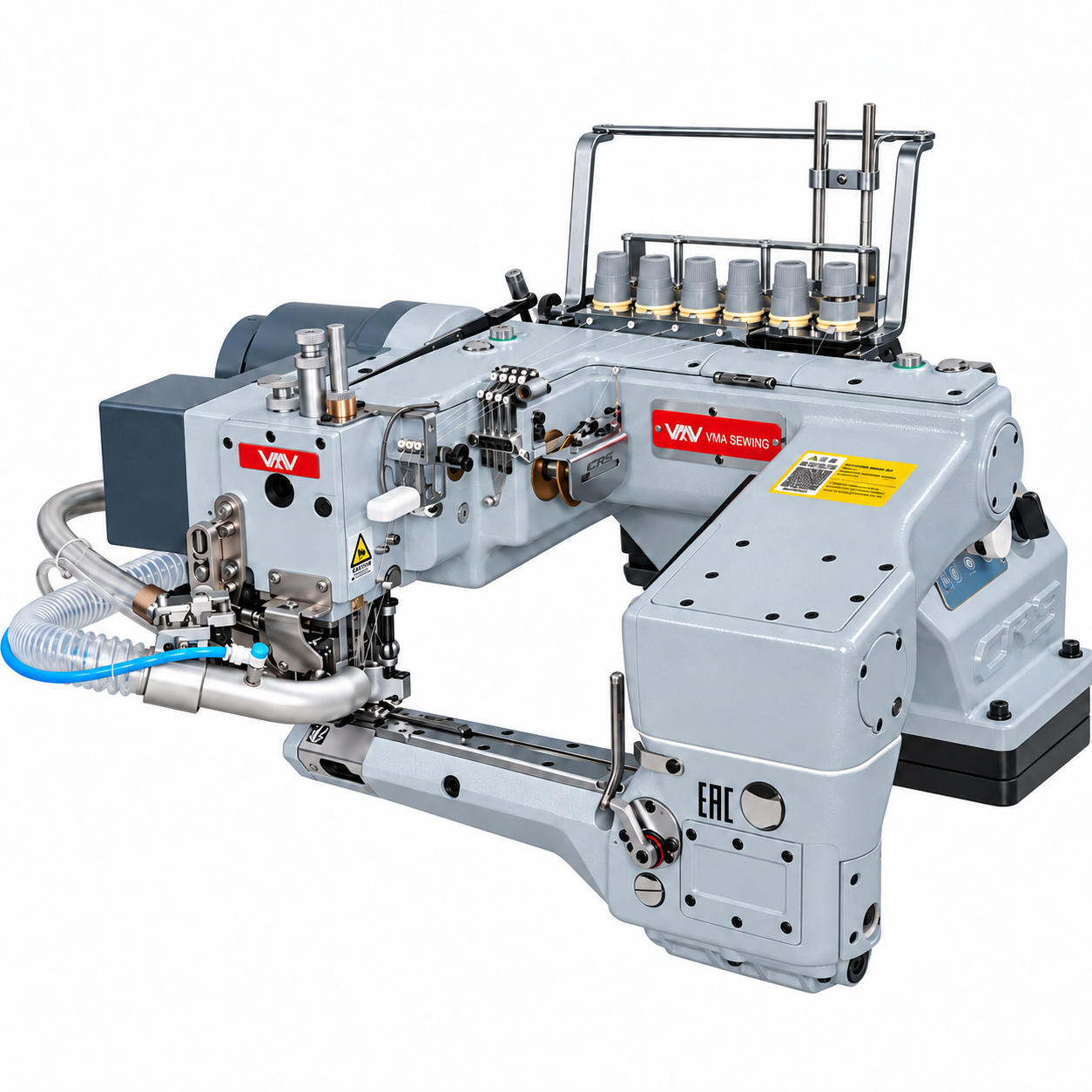
For high-speed sewing applications involving knitwear and stretch fabrics, VMA recommends the V-701AT-DF-SS High-Speed Direct Drive 4-Needle 6-Thread Coverstitch Machine.
According to the product specifications, this model combines double differential feeding, automatic thread trimming and direct-drive operation to support stable, efficient sewing.
3. Key Features
High-Speed Sewing
The machine has a factory preset speed of 3,200 RPM and a maximum sewing speed of 3,800 RPM, according to the product sheet.
Double Differential Feeding
Adjustable front and rear differential feed helps improve fabric control and reduce stretching and puckering when correctly set for the material.
Automatic Thread Trimming
Automatic thread trimming helps reduce manual finishing operations and supports a more efficient production workflow.
Stable Stitch Formation
Stable thread tension helps produce neat and consistent stitches across suitable knit and stretch fabrics.
Wide Application Range
The machine is listed for T-shirts, knitwear, sportswear, underwear and other stretch fabrics.
4. Technical Specifications
| Parameter | Specification |
|---|---|
| Model | V-701AT-DF-SS |
| Sewing Type | 4-Needle 6-Thread Coverstitch |
| Number of Needles | 4 |
| Number of Threads | 6 |
| Differential Feed | Double, front and rear adjustable |
| Maximum Sewing Speed | Up to 3,800 RPM |
| Presser Foot Lift | 11 mm |

5. How to Choose the Right Machine for Your Sewing Process
Before purchasing a flat-seamer machine or industrial coverstitch machine, garment manufacturers should confirm the required stitch formation, fabric type, seam construction and production volume.
A machine suitable for coverstitching is not automatically suitable for every flat-seam joining operation. Confirming the required sewing result helps ensure that the selected equipment matches the actual production process.
Conclusion
Specialized multi-needle sewing machines play an important role in stretch garment manufacturing, where fabric control, seam consistency and production efficiency matter.
The VMA V-701AT-DF-SS offers double differential feeding, automatic thread trimming and a maximum sewing speed of 3,800 RPM for suitable knitwear and stretch-fabric applications.
For garment factories upgrading their sewing operations, selecting equipment according to the required stitch structure and fabric characteristics is essential for achieving reliable production results.
FAQ
What fabrics are suitable for the V-701AT-DF-SS?
According to the product sheet, it is suitable for T-shirts, knitwear, sportswear, underwear and other stretch fabrics.
How does double differential feeding help?
It provides adjustable control over front and rear feeding, helping manage fabric stretching and puckering.
What should manufacturers check before purchasing a flat-seamer machine?
They should confirm the required stitch type, fabric characteristics, seam construction and machine configuration.
Sewing Automation Solution Expert