
Laser Cutting Machine for Garment and Textile Production
The Application of Laser Cutting Machines in the Garment Industry
Laser cutting technology is widely used in modern garment and textile manufacturing. Compared with traditional knife cutting or manual cutting, laser cutting uses a focused beam to cut fabric along a programmed path, helping factories achieve accurate shapes, clean edges and flexible pattern processing.
In the apparel industry, laser technology is used not only for fabric cutting, but also for engraving, pattern decoration, denim finishing, perforation and special textile processing. A research overview published in Fashion and Textiles notes that laser cutting and engraving technologies have been widely applied in garment factories, fabric production units, textile industries and leather industries.
1. Why Laser Cutting Is Useful for Garment Manufacturing
Garment production often requires accurate cutting of fabric panels, labels, appliqué pieces, embroidery patches, decorative patterns and special garment components. For complex designs, traditional cutting methods may require molds, blades or additional manual handling.
Laser cutting offers several practical advantages:
- High cutting accuracy for complex shapes
- No direct tool contact with fabric
- Clean and smooth cutting edges
- Flexible digital pattern processing
- Suitable for small-batch customization and mass production
- Reduced tool wear compared with mechanical cutting
Eurolaser describes CO₂ laser textile cutting as a non-contact process that helps avoid fabric distortion and supports precise cutting for materials such as polyester, viscose, aramid and other technical textiles.
2. Common Applications in the Garment Industry
Laser cutting machines can be used in many garment and textile processes.
1. Fabric Panel Cutting
Laser cutters can cut fabric panels according to digital patterns. This is useful for sample development, custom production and garment factories that need flexible style changes.
2. Appliqué and Embroidery Patch Cutting
For embroidery badges, labels, decorative patches and appliqué parts, laser cutting can follow complex outlines with high accuracy.
3. Sportswear and Functional Apparel
Sportswear, outdoor clothing and functional garments often use synthetic fabrics, mesh fabrics and technical textiles. Laser cutting can create clean openings, ventilation holes and special shapes.
4. Denim and Fashion Decoration
Laser technology is also used for denim engraving, fading effects and decorative patterns. Research on laser use in garment manufacturing identifies denim engraving as one of the growing applications of CO₂ laser systems.
5. Textile Accessories and Special Materials
Laser cutting can also be applied to reflective tape, woven labels, leather pieces, non-woven fabrics and certain technical textile components, depending on material suitability and machine configuration.
3. Edge Quality and Material Considerations
One important advantage of laser cutting is edge quality. Because the process uses heat, some synthetic fabrics can be cut and sealed at the same time, reducing fraying after cutting. Luxinar notes that CO₂ laser fabric cutting can produce clean-cut edges with minimal post-processing, and the non-contact process avoids tool wear and fabric distortion.
However, factories should also test materials before bulk production. Different fabrics react differently to laser power, cutting speed and heat. Cotton, polyester, denim, leather, blended fabrics and coated textiles may require different parameter settings. Some materials may produce smoke or odor during cutting, so proper exhaust and ventilation are important for safe operation.
4. Recommended VMA Machine: V-LS140100-1 Laser Cutting Machine
For garment factories that need a large laser cutting solution, VMA recommends the:

V-LS140100-1 Laser Cutting Machine
According to the VMA product information, the V-LS140100-1 is a single-head laser cutting machine with a working area of 140 × 100 cm, suitable for fabric cutting and textile processing applications.
Main Features
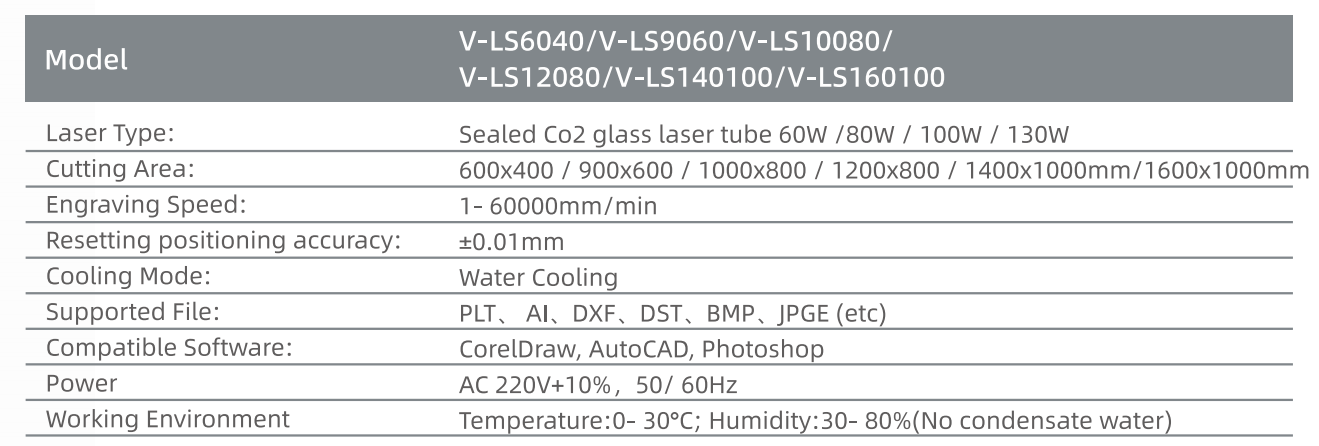
The machine is suitable for factories that need digital cutting, accurate contour processing and flexible production for different garment materials.
5. How Laser Cutting Helps Improve Production Efficiency
Laser cutting machines help garment factories improve efficiency in several ways.
1. Digital Pattern Processing
Patterns can be created or edited in software and then processed by the machine, reducing the need for physical cutting molds in many applications.
2. Faster Style Change
When garment styles change, operators can adjust the digital file rather than changing mechanical tooling. This is useful for small-batch production and sample development.
3. Cleaner Cutting Results
For suitable materials, laser cutting can reduce frayed edges and improve the quality of cut pieces.
4. Lower Mechanical Wear
Because laser cutting is non-contact, there is no blade wear during cutting. This helps reduce mechanical maintenance related to cutting tools.
5. Better Processing for Complex Shapes
Laser cutting is especially useful for intricate patterns, curves, small holes and decorative garment parts that are difficult to cut consistently by hand.
6. Why Garment Factories Should Consider Laser Cutting
For modern garment factories, cutting quality directly affects sewing quality and final garment appearance. Poor cutting accuracy can cause alignment problems, uneven edges and more rework in later sewing processes.
Laser cutting is especially valuable for factories producing:
- Fashion garments
- Sportswear
- Textile accessories
- Embroidery patches
- Labels and appliqué parts
- Denim decoration
- Technical textile products
- Customized garment components
By using a laser cutting machine, factories can improve cutting precision, reduce manual handling and support more flexible garment development.
Conclusion
Laser cutting machines have become practical tools in garment and textile manufacturing. They support accurate fabric cutting, clean edge processing, digital pattern control and flexible production for different garment applications.
For factories that need a large-format fabric laser cutting solution, the VMA V-LS140100-1 Laser Cutting Machine provides a 140 × 100 cm working area, CO₂ laser configuration, water cooling system, software compatibility and accurate positioning for garment production needs.
As garment manufacturing continues to move toward digitalization and flexible production, laser cutting will play an important role in improving fabric processing efficiency and product quality.
FAQ
What is a laser cutting machine used for in garment manufacturing?
It is used for fabric cutting, pattern cutting, appliqué cutting, embroidery patch cutting, label cutting, denim engraving and special textile processing.
Why is CO₂ laser commonly used for textiles?
CO₂ laser technology is widely used for organic and textile materials because it can process many fabrics with clean cutting results.
Can laser cutting prevent fabric fraying?
For some synthetic fabrics, laser heat can seal the cutting edge and help reduce fraying. The result depends on fabric type and machine settings.
What is the working area of VMA V-LS140100-1?
The VMA V-LS140100-1 has a working area of 1400 × 1000 mm.
Is laser cutting suitable for mass production?
Yes. Laser cutting can support both flexible small-batch production and high-volume garment processing, depending on material, pattern complexity and production layout.
Sewing Automation Solution Expert